Table of Contents
A handmade fall wreath is one of the easiest ways to make a front door feel personal. You choose the palette, the fullness, and the size, and you can usually reuse the base next year with fresh materials.
These 12 ideas start with the base and tools, move through six different material stories, and finish with how to hang the wreath without drilling into the door. The palette stays in cream, wheat, rust, olive, and natural wood so the wreath can stay up from late September through Thanksgiving.
Quick Glance
- Grapevine base is the most forgiving for beginners.
- Wire + hot glue beat floral tape for outdoor durability.
- Odd numbers of stems or clusters read intentional.
- A wreath hanger beats nails and preserves the door.
- Fresh materials next year: keep the base, swap the dressing.
The five supplies that cover most designs:
At a Glance
| Item | Best For | Budget | Effort |
|---|---|---|---|
| 18-inch grapevine base | Universal foundation | $12-18 | Easy |
| Floral wire + glue gun | Attachment method | $15-20 | Easy |
| Dried pampas (100 stems) | Volume and softness | $15-25 | Easy |
| Assorted mini pumpkins | Texture and color | $10-15 | Easy |
| Velvet ribbon (25yd) | Hanging + accent | $8-12 | Easy |
How to Choose Wreath Supplies
The right base decides how easy the whole project is. Grapevine forgives uneven placement because stems tuck into the woven vines; wire frames need more coverage but cost less; foam is only worth it for pieces that need dense, all-over attachment like pine cones.
Buy attachment supplies before decorative ones. A 22-gauge paddle wire and a dual-temp glue gun handle nearly every material in these twelve ideas, and running out mid-build is the most common reason wreaths end up half-finished. Choose your palette last—three materials in one color family beat seven in mixed tones.
1. Start With a Natural Grapevine Base
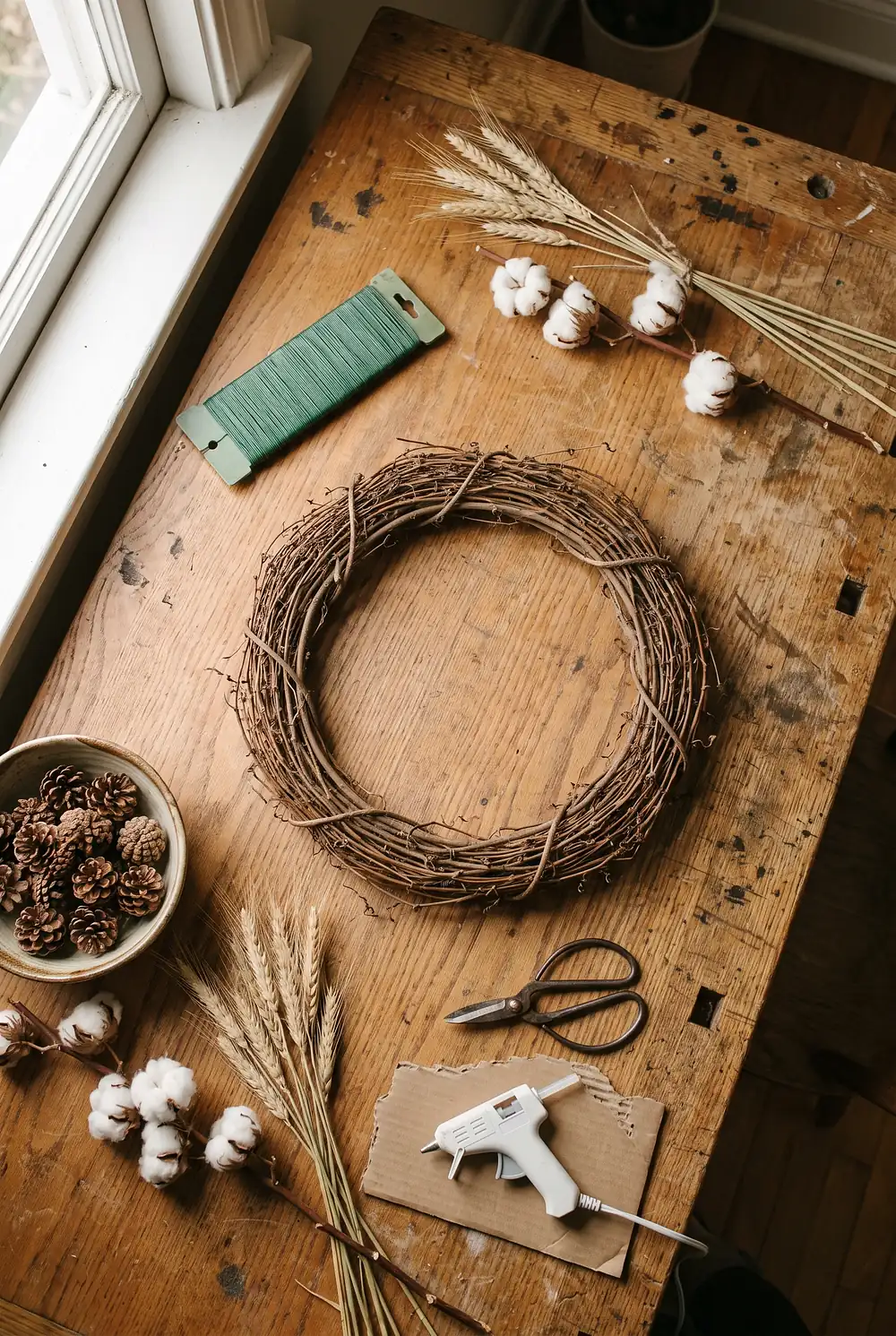
A grapevine ring is forgiving: stems tuck into the twisted vines, glue grips the rough surface, and any gaps you leave still look natural. An 18-inch base reads well on a standard front door without crowding the handle.
The Richland 18-inch natural grapevine wreath is a bare base only, so plan your materials separately. Leave some vine exposed on purpose; that brown texture is part of the look.
Tip
2. Set Up a Small Wreath Kit Before You Begin
Two tools handle almost every DIY wreath: floral wire for anything with a stem and hot glue for small pieces like pine cones or pumpkins. Lay out the base, cut your stems, and keep a scrap of cardboard under the glue gun.
The 22-gauge green paddle wire, 3-pack is easy to wrap around bundles and hide inside grapevine. Pair it with the Gorilla dual-temp mini hot glue gun kit; the lower setting is gentler on dried flowers, and either setting still gets hot enough to burn fingers.
3. Go Minimal With a Metal Hoop and One Floral Corner
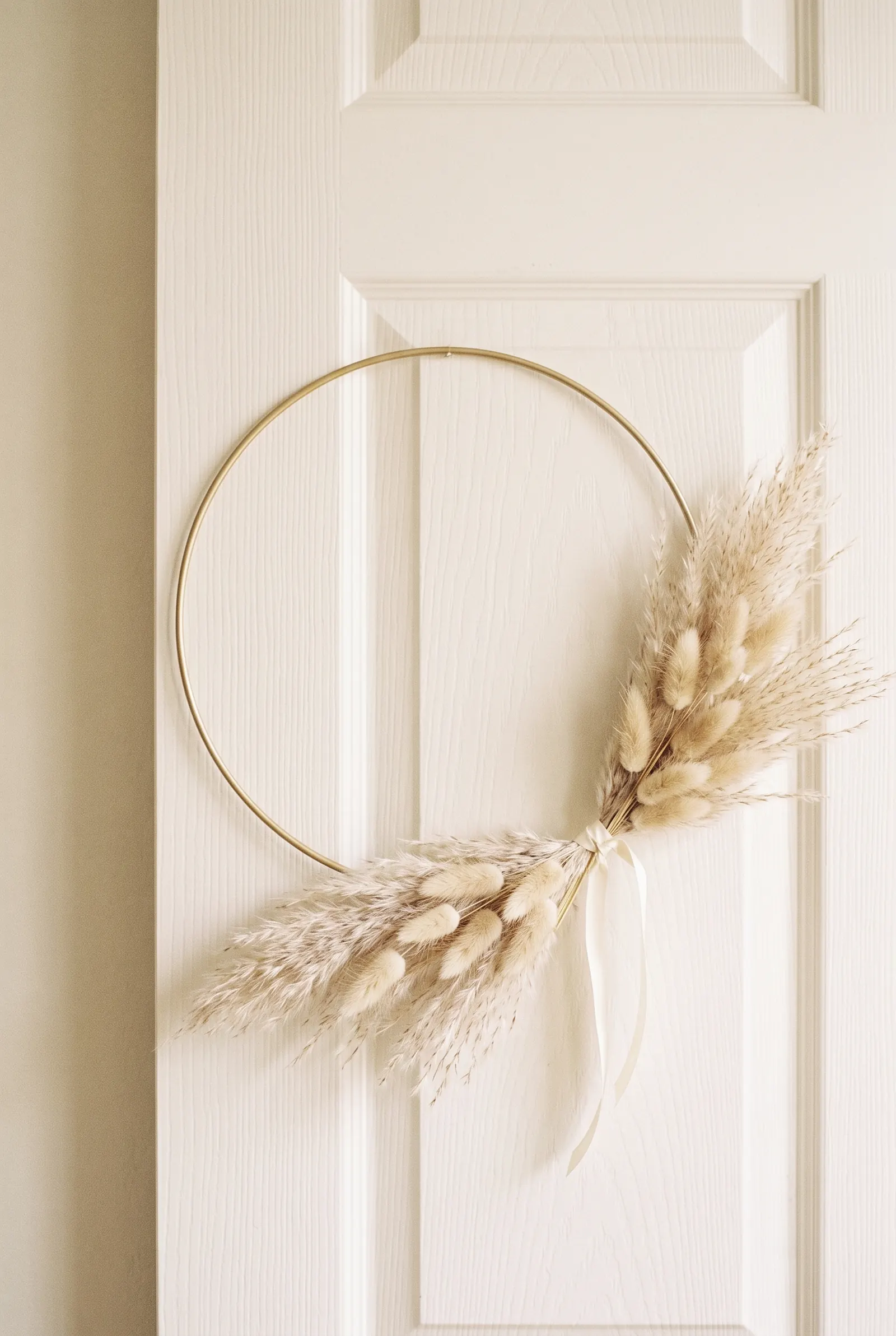
A thin metal ring with flowers on only one side looks modern and takes a fraction of the materials. Wire a tight bundle at the four or eight o’clock position and let the rest of the ring stay bare.
The 14-inch round wire wreath frame, 2-pack is frame only, which makes it a good match for this idea. Make a second hoop with a contrasting material if you want a pair for double doors.
4. Build a Soft Pampas and Bunny-Tail Wreath
Pampas gives a wreath volume without heavy color, which suits cream doors and neutral porches. Wire small clusters around the ring in one direction so the plumes overlap like feathers.
The 100-stem dried pampas grass with bunny tails has strong review volume and a soft beige tone. Dried pampas sheds a little, so a covered porch or storm door protects it better than a door that takes direct rain.
Tip
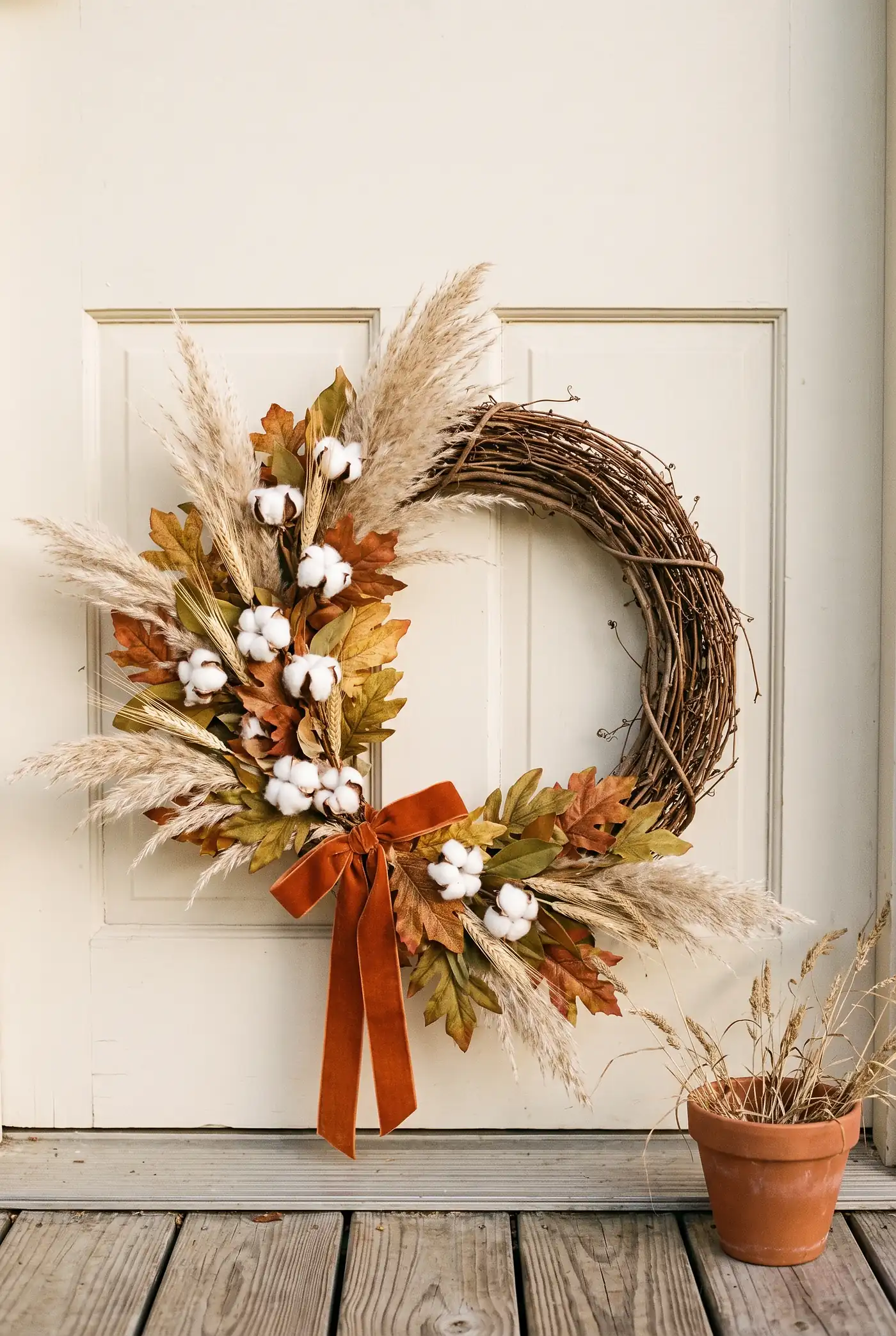
5. Make a Farmhouse Cotton Wreath
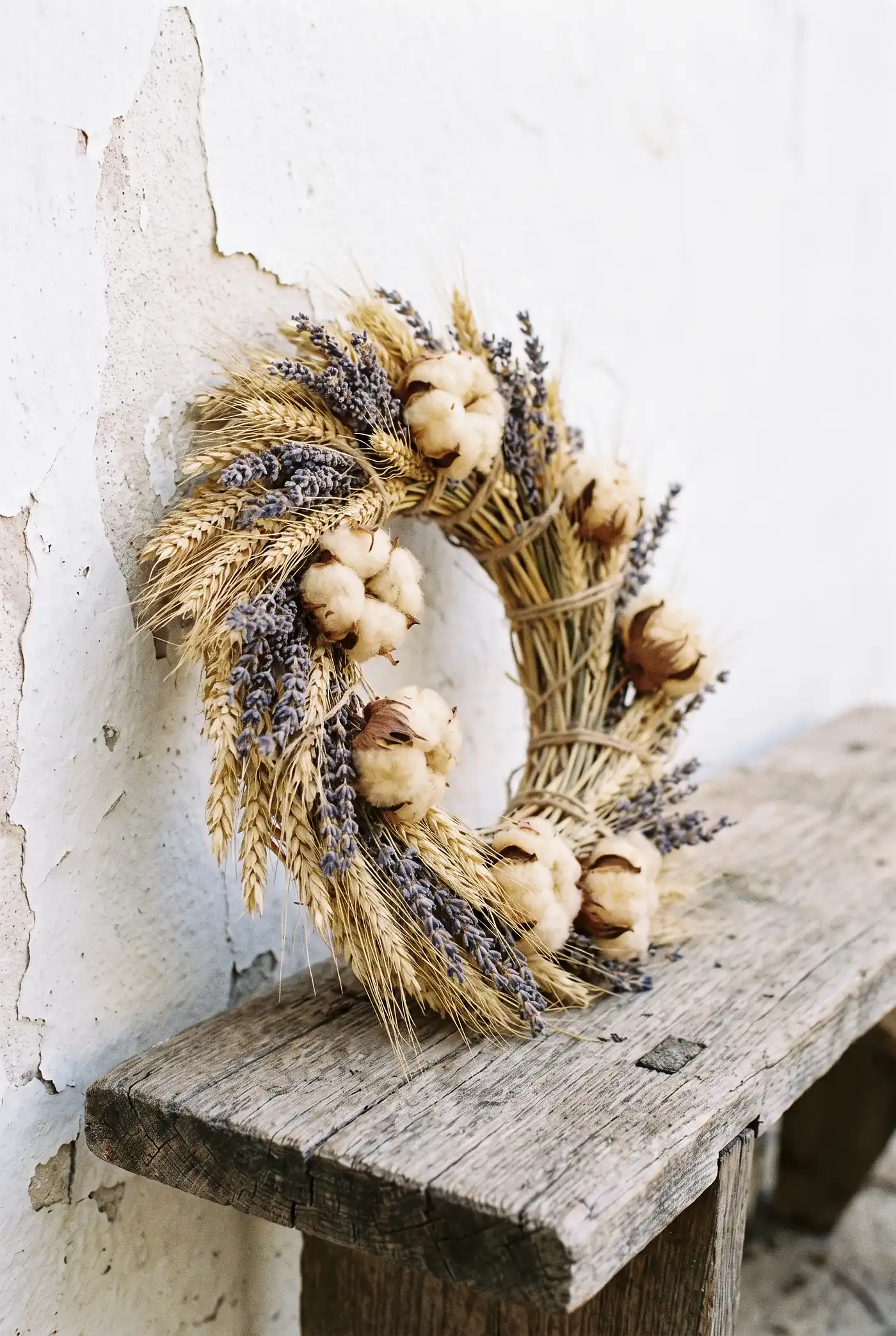
Cotton bolls read cozy and quiet, and they bridge fall into early winter. Space stems evenly around a grapevine base, then fill gaps with a few pampas sprigs or bare vine.
The 30 natural dried cotton stems, 16 inches are real dried cotton rather than faux, so each boll varies a little. Keep this one sheltered from rain, since wet cotton can flatten and discolor.
6. Create an Asymmetrical Fall Eucalyptus Swag
When you want classic autumn color, use leaves on one side only. Wire stems along the lower left curve of a grapevine ring, all pointing the same way, and taper the ends so the wreath looks like it grew that way.
The artificial fall eucalyptus stems, 6-pack bring rust and gold tones without real leaves that crumble. Cut the stems into shorter pieces with wire cutters to get more coverage from one pack.
7. Bundle Wheat and Lavender for a Harvest Wreath
Wheat is the most traditional harvest material, and it looks best in small bundles. Make palm-sized bunches, wrap each stem end with wire, and attach them overlapping around a small base.
The natural dried flower bouquet with wheat, lavender, and pampas is a mixed bouquet rather than a pure wheat bundle. It covers a small 12-to-14-inch wreath; for a large door, combine it with another material from this list.
8. Glue a Pine Cone Wreath for Lasting Texture
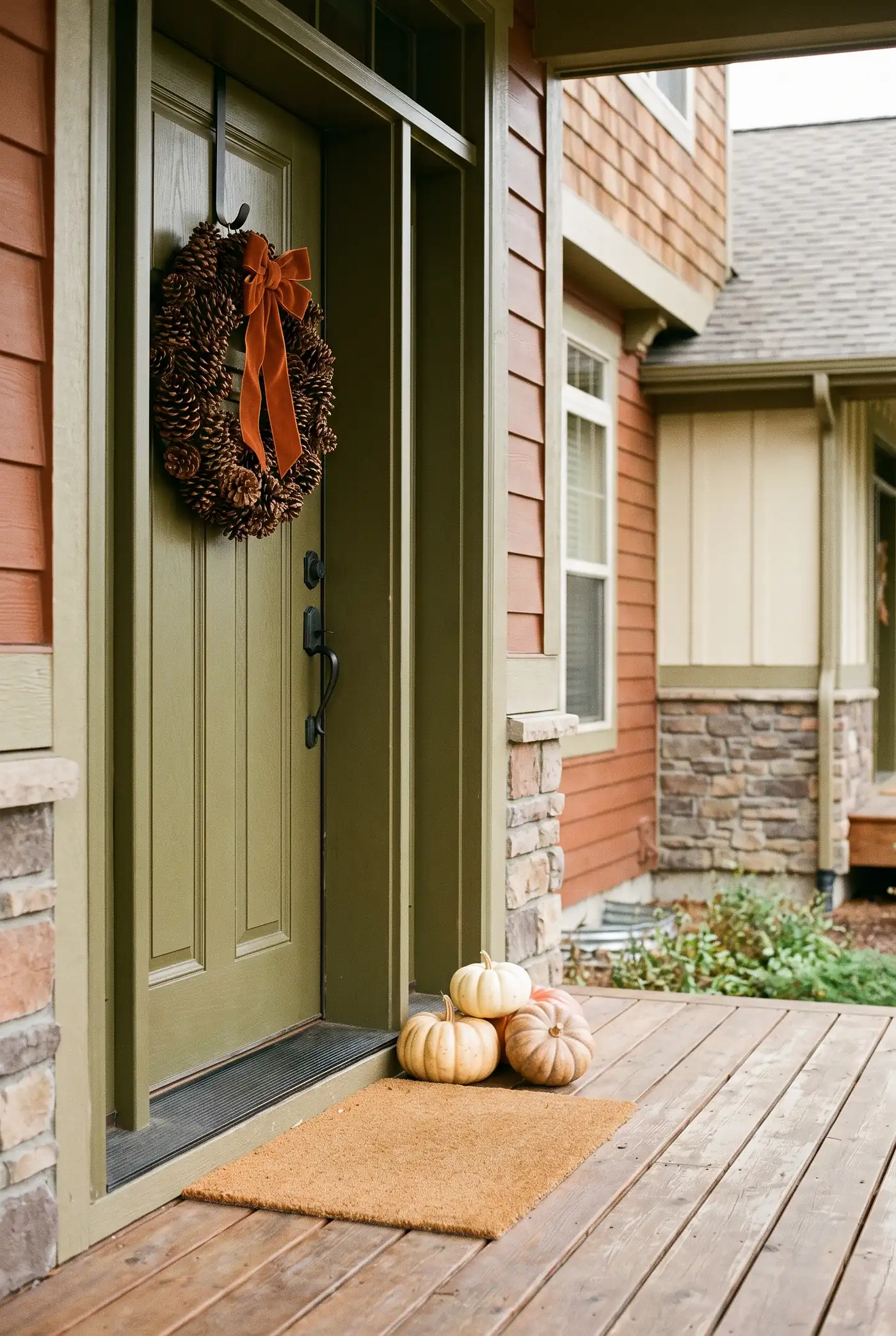
Pine cones are sturdy, cheap, and handle cooler weather well. Glue the largest cones first, angled outward, then fill gaps with smaller ones so no base shows through.
The 150 natural mini pine cones are small, so this works best on a narrow base or as a filler around other materials. Expect natural size variation in a bag this large.
9. Add a Small Cluster of Mini Pumpkins
A few pumpkins make a wreath unmistakably fall, but a full ring of them can look busy. Glue three to five in one tight cluster near the bottom, where a bow or a floral corner would normally sit.
The 80-piece mini craft pumpkin set has strong review volume. The listing defaults to a gold mix; choose one of the white, brown, or natural color options on the live page if you want a softer, neutral wreath.
10. Finish With a Velvet Ribbon Bow
A velvet bow adds richness and hides any wire or glue at the join. Tie a loose bow with long tails, then wire it on at the top or the bottom depending on where your heaviest materials sit.
The burnt orange velvet ribbon, 1.5 inches by 25 yards gives plenty of length for several wreaths. The listing does not describe it as wired, so shape the bow by hand and trim the tails at an angle to keep them neat.
11. Combine Leftovers Into a Mixed-Texture Harvest Wreath
After a few projects you will have spare pampas, cotton, wheat, and cones. Group them into three repeating clusters around one base so the wreath looks planned, not random.
Keep one material dominant and use the others as accents. If the result feels heavy, remove one cluster rather than adding another.
12. Hang It Without Drilling the Door
An over-the-door hanger is the simplest way to display a wreath, especially on rentals. Center the wreath at eye level and leave a little space above the door knocker or peephole.
The Sattiyrch 15-inch over-the-door wreath hanger has a very large review history. Close the door gently after installing it to make sure the hook fits in the top gap without scraping the paint.
A Simple DIY Wreath Formula
When a wreath starts to look overworked, return to this mix:
- One base: grapevine for rustic texture or a metal hoop for a modern line.
- One main material: pampas, cotton, eucalyptus, wheat, or pine cones.
- One accent: a pumpkin cluster or a velvet bow, not both on a small base.
Spend more time on spacing than on adding more stems. Gaps and visible base usually make a handmade wreath look more refined.

Shop the Look
These independently selected products support the ideas above. Check the current price, availability, and selected variant on Amazon before purchasing.
Richland Natural Grapevine Wreath, 18 inch
22-Gauge Green Floral Paddle Wire, 3-pack
Gorilla Dual Temp Mini Hot Glue Gun Kit, 30 Sticks
14-inch Round Wire Wreath Frame, 2-pack
Dried Pampas Grass, 100 Stems with Bunny Tails
30 Natural Dried Cotton Stems, 16 inch
Artificial Fall Eucalyptus Stems, 6-pack
Natural Dried Flower Bouquet with Wheat, Lavender & Pampas
150 Natural Mini Pine Cones
80-Piece Mini Craft Pumpkins
Burnt Orange Velvet Ribbon, 1.5 in x 25 yd
Sattiyrch 15-inch Over-the-Door Wreath Hanger
| Item | Best For | Shop |
|---|---|---|
| Richland Natural Grapevine Wreath, 18 inch | Grapevine wreath bases | View on Amazon |
| Dried Pampas Grass, 100 Stems with Bunny Tails | Dried pampas for wreath volume | View on Amazon |
| 80-Piece Mini Craft Pumpkins | Mini craft pumpkins | View on Amazon |
| Burnt Orange Velvet Ribbon, 1.5 in x 25 yd | Burnt orange velvet ribbon | View on Amazon |
| Natural Dried Flower Bouquet with Wheat, Lavender & Pampas | Dried stem bouquet for bedroom vase | View on Amazon |
FAQ
What do I need to make a fall wreath?
You need a base (grapevine or a metal ring), one or two main materials, floral wire, and a hot glue gun. Wire cutters help with faux stems, and a ribbon finishes the join.
How long does it take to make a DIY fall wreath?
A simple hoop or single-material wreath can take less than an hour. Fuller designs with many small glued pieces, like pine cones, take longer because the glue needs to set between layers.
Can a dried-flower wreath hang outside?
Dried pampas, cotton, and wheat do best on a covered porch or behind a storm door. Direct rain and strong wind can flatten or shed them, so bring the wreath inside during storms.
How big should a front door wreath be?
For a standard 36-inch door, a wreath about 18 to 24 inches across usually looks balanced. Smaller hoops work well in pairs on double doors or on narrow side entries.
How do I store a fall wreath for next year?
Wrap it loosely in tissue, place it in a box or wreath bag, and store it flat somewhere cool and dry. Dried materials may need a light refresh, but the base can usually be reused.
Make it once, keep the base, and change one material each season for a front door that always looks considered.